Last updated November 25, 2026
Free roof inspection with deck photos before we talk money - GAF and Owens Corning certified installation
How to Hire a Roofing Contractor in Tacoma: A Step-by-Step Guide
Most homeowners in Tacoma treat a roofing quote like a price comparison, and that’s the mistake that costs them later. The number on the page tells you almost nothing about whether the crew showing up is insured, whether the shingles are the ones specified, or whether the company can actually recommend the right roof for your house instead of the only one they sell. Hiring well is a vetting process, not a shopping process. This guide walks you through what to verify, the questions most homeowners never ask, and the specific red flags that separate legitimate contractors from the ones who disappear after the first check clears.
Quick Answer
To hire a roofing contractor in Tacoma, verify the contractor’s Washington State registration in the L&I database, confirm whether the crew on your roof will be employees or subcontractors, insist on a line-itemed written estimate with manufacturer names and product grades, and tie your payments to project milestones rather than a large deposit up front. A contractor who installs only one brand can’t give you an honest material recommendation, so ask how many brands and material types they actually install before you trust their advice. Get everything in writing, and never sign on the first visit.
Styles & brands we work with
- Architectural shingles
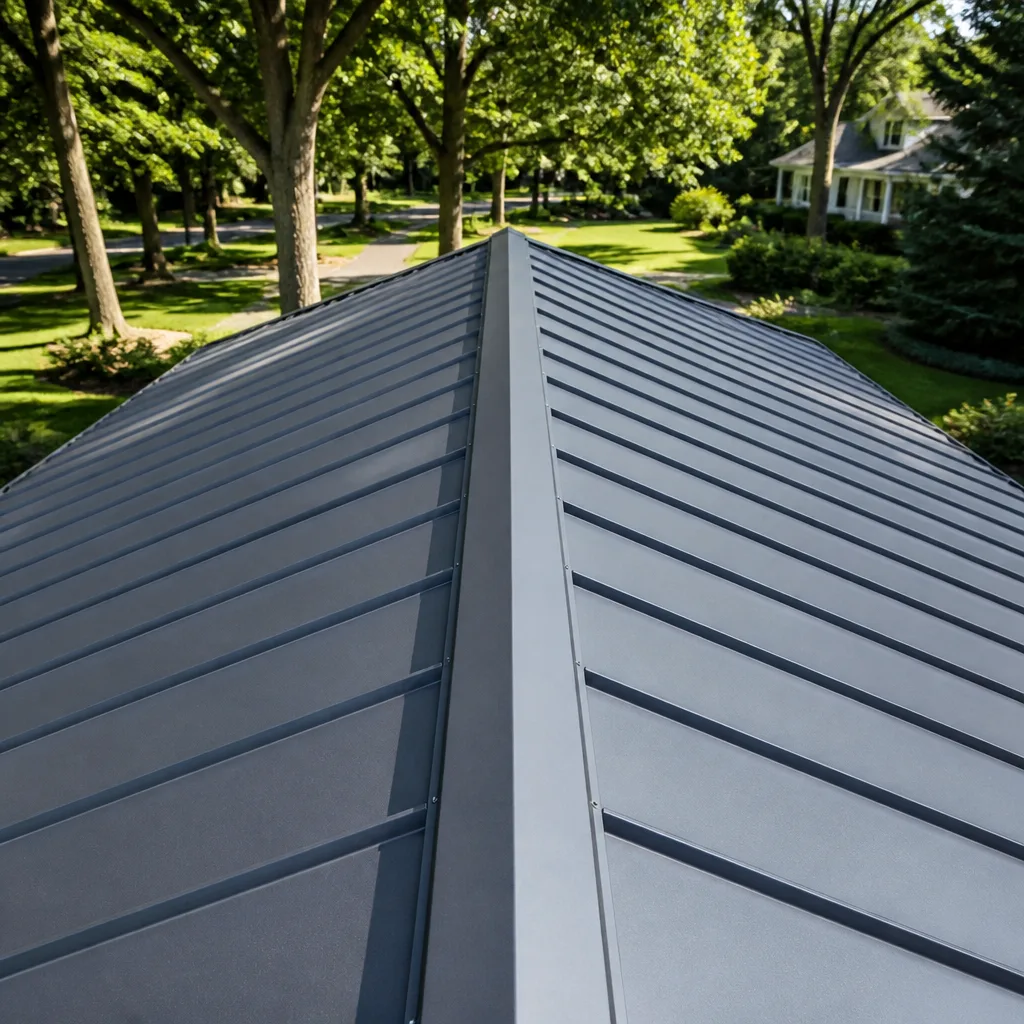
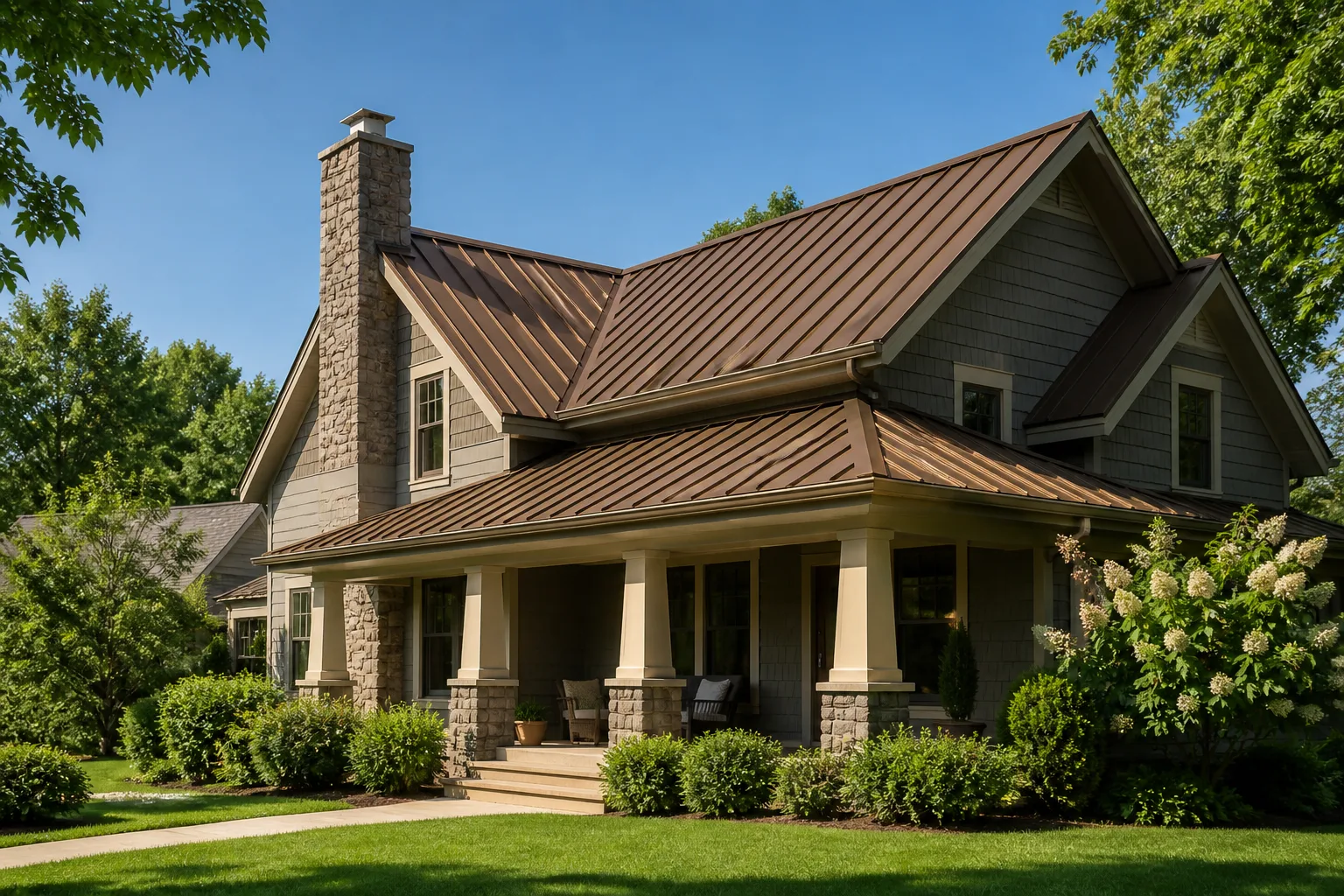
- Metal roofing
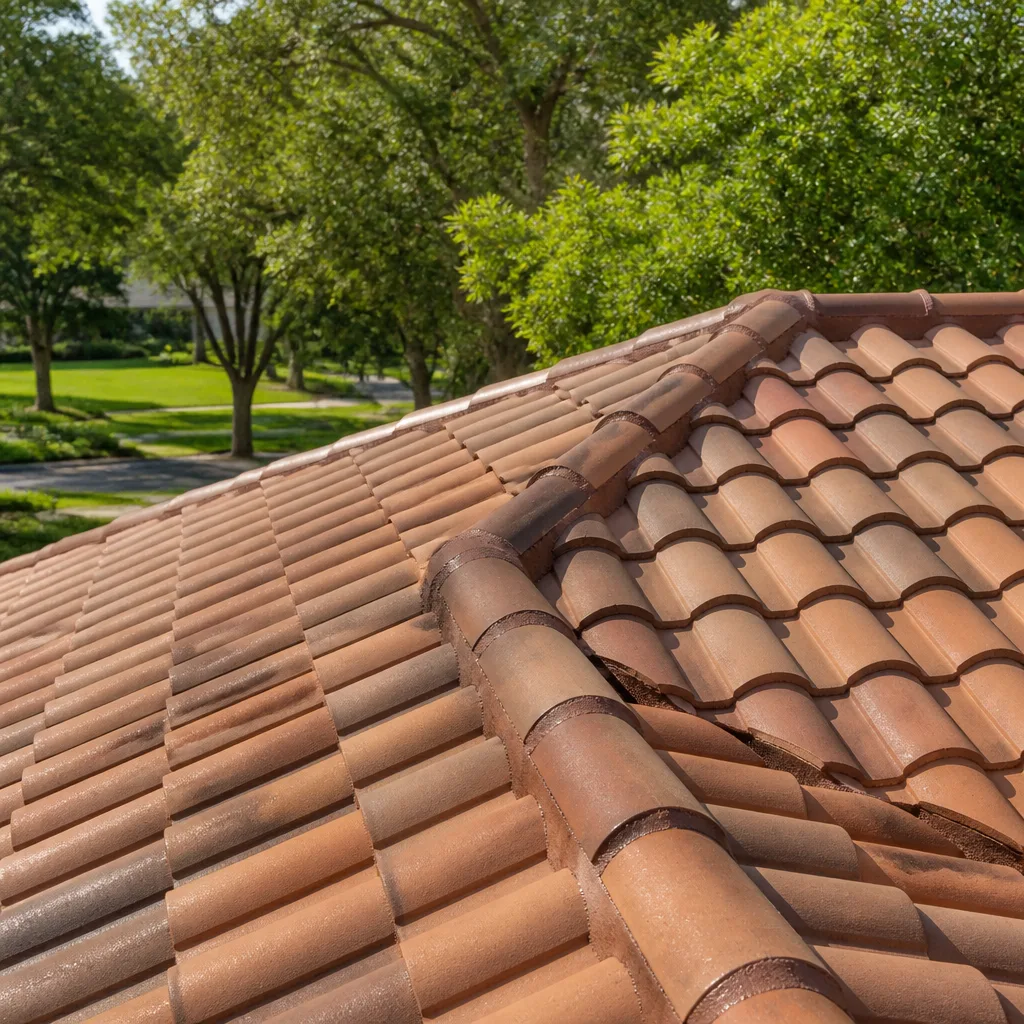
- Tile roofing
- GAF
- Owens Corning
- Flat & low-slope
Table of Contents
- Why Hiring Well Matters More Than Pricing
- How Do You Verify a Contractor’s Washington State License?
- The Subcontractor Question Nobody Asks
- Why a Single-Brand Contractor Can’t Advise You Honestly
- What Should a Legitimate Roofing Estimate Contain?
- How Should You Structure Payments to Protect Yourself?
- Red Flags Specific to the Tacoma Market
- Questions to Ask Before You Sign
Why Hiring Well Matters More Than Pricing
Roofing is one of the few home purchases where the cheapest bid and the best bid can look identical on paper. The difference is in what’s underneath: the decking, the underlayment, the flashing, the ventilation, and the labor. A roof is a system, and a system installed badly fails in ways that don’t show up for years. In our experience, the homeowners who end up unhappy are rarely the ones who paid the most. They’re the ones who never asked who was doing the work, or what exactly was going on the roof.
Tacoma’s climate adds a layer to this. The long wet season means water has months to find weak spots before you’d notice them, and freeze-thaw swings in the surrounding hills work on flashing and seals. A roof that would hold up in a dry climate can fail here if the details aren’t done right. When you’re vetting a contractor in Tacoma, you’re really vetting whether they understand how a roof performs in this particular climate.
And then there’s the pressure of the moment. After a windstorm rolls through the South Sound, out-of-state contractors appear with door-to-door pitches, temporary registrations, and prices that expire “today.” Some are legitimate. Many aren’t. Learning to tell them apart before you need a roof is the whole game. This guide gives you the checklist.
How Do You Verify a Contractor’s Washington State License?
In Washington, you verify a roofing contractor through the state’s licensing database run by the Department of Labor & Industries (L&I). Search the business name, confirm the registration is active, and check the status date. A contractor who isn’t currently registered can’t legally bid or perform the work.
What the L&I Database Actually Tells You
The database gives you real, checkable facts. Here’s what to pull:
- Active status. Confirm the registration is current, not expired or suspended. Look at the effective date, not just the “found” result.
- Registration type. A general contractor registration covers your project. If the listing is for a specialty or a different classification, ask why.
- Bond and insurance on file. The database shows whether a bond and liability insurance are current. You don’t need to invent a policy number to know coverage exists – the state tracks it for you.
- Business name matching. Make sure the name on the estimate, the contract, and the database all match. Mismatches are a signal to slow down.
- Complaint history. Some listings include prior actions. A single blip isn’t disqualifying; a pattern is.
What the Database Doesn’t Tell You
Here’s the part most people miss: a clean state record doesn’t mean the contractor is good. It means they’re compliant with registration rules. The database won’t tell you whether the crew installing your roof is trained, whether the company uses its own employees or day labor, whether the materials are what’s in the spec, or whether the workmanship is solid. It also won’t tell you how they handle a leak call six months later. Verification is the floor, not the ceiling. The rest of this guide is about the ceiling.
One more local note: after major wind events, temporary registrations swell in the weeks that follow. A temporary status isn’t automatically a problem, but it tells you to ask harder questions about local presence and where the crew is coming from. If you want a roundup of other things to check, see our guide on Tacoma Roofing Co and how we handle material selection.
The Subcontractor Question Nobody Asks
Ask every contractor one question: “Will the people on my roof be your employees or subcontractors?” The answer changes your risk profile, and almost no homeowner thinks to ask it. On a lot of jobs, the salesperson who visits your home is not the crew that shows up – and sometimes that crew is a subcontractor the company hired for the day.
Why It Matters
Subcontracting isn’t automatically bad. Many reputable companies use subs for specific scopes. But there’s a real difference between a known, vetted subcontractor and day labor, and that difference shows up in liability. If a worker is injured on your property and the contractor doesn’t carry the right coverage, that exposure can land at your door. If the subcontractor isn’t properly registered, the state’s complaint process may not cover the work. And if the crew has never installed the specific product going on your roof, the details suffer.
Ask these follow-ups:
- Do your own employees install the roof, or do you sub it out?
- If you sub, who are the subs, and how long have you worked with them?
- Are the subs covered under your bond and insurance, or their own?
- Can you put the personnel arrangement in writing?
A contractor who hedges or won’t answer is telling you something. A contractor who answers clearly and puts it in the contract is demonstrating that they take liability seriously – which is exactly what you want before anyone climbs on your roof.
Why a Single-Brand Contractor Can’t Advise You Honestly
This is the point competitors won’t volunteer. A contractor who installs one shingle brand, or one material type, cannot give you an honest recommendation – not because they’re malicious, but because the only tool they have is the one they sell. You’re paying for advice and getting a sales pitch. The recommendation was made before you ever called.
What Material Breadth Actually Buys You
Different roofs suit different structures and goals. Asphalt shingles are the workhorse for most Tacoma homes, but the grade matters – a builder-grade shingle and a premium architectural shingle are different products with different lifespans and warranties. Metal is a different conversation entirely: longer service life, different installation demands, and a look that suits some homes and not others. Tile offers another profile and durability curve. A contractor who handles all three can compare them honestly. A contractor who handles one will find a way to tell you that one is the answer.
That’s why we carry seven brands – GAF, CertainTeet, Owens Corning, IKO, Atlas, Tamko, and Boral – across shingle, tile, and metal. When an estimator can put IKO and Atlas side by side, or compare a Boral tile profile against a metal panel, the recommendation is driven by your roof and your budget, not by what happens to be in a warehouse. The same logic applies whether you’re planning a roof replacement or a full new roof installation.
When you interview contractors, ask: How many brands do you install? How many material types? Can you show me comparable quotes across brands for my roof? If the answers are “one” and “one,” you already know what the recommendation will be.
What Should a Legitimate Roofing Estimate Contain?
A proper Tacoma roofing estimate is line-itemed. It names the manufacturer, the product, the grade, the underlayment, the flashing, the ventilation, and the scope of tear-off. An estimate that says “shingles” and one big number is not an estimate – it’s a guess with a signature line.
A Complete Estimate Includes:
- Materials with manufacturer names and product lines (for example, a specific GAF or CertainTeed shingle, not “architectural shingle”), plus underlayment, ice and water shield where needed, ridge and hip products, and fasteners.
- Scope of tear-off – how many layers are being removed, how decking will be inspected and replaced if damaged, and how that replacement is priced.
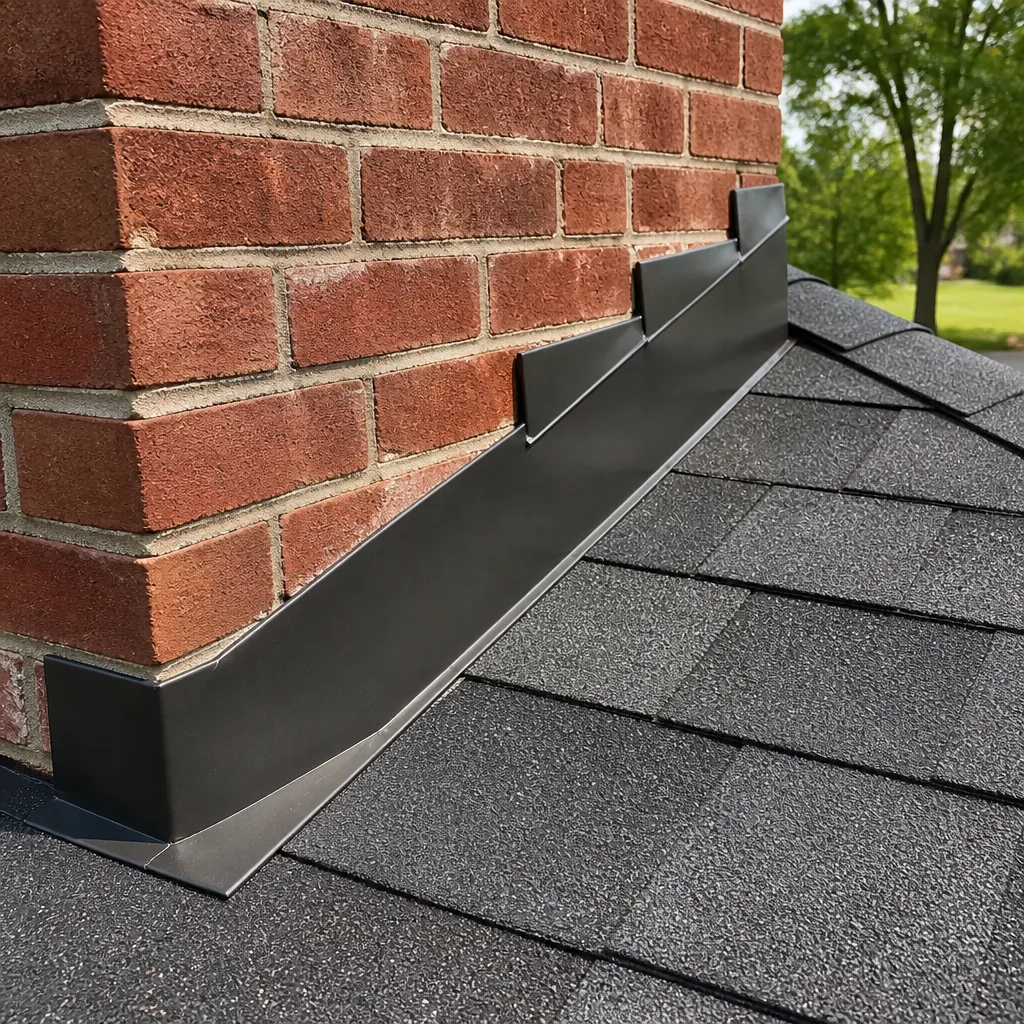
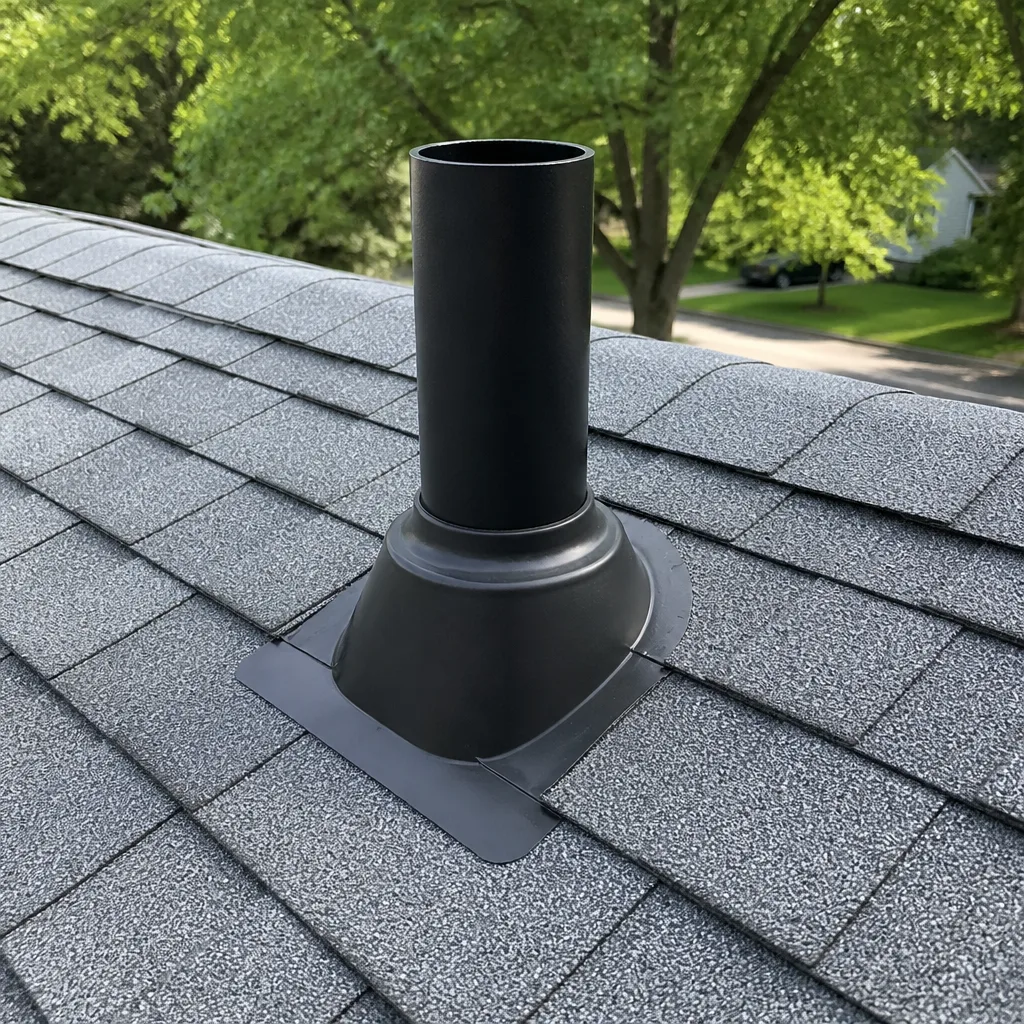
- Flashing and penetration details – valleys, chimneys, skylights, vents, and pipe boots named individually.
- Ventilation plan – intake and exhaust calculated for your roof, not simply reused from a template.
- Warranty terms in writing – the manufacturer’s product warranty and the workmanship warranty, spelled out.
- Permit responsibility – who pulls it and who pays for it. Most cities require a permit for reroofing, so confirm your contractor handles this and ask which department issues it in Tacoma.
- Timeline and clean-up plan – start window, daily site care, and debris removal.
If a contractor can’t give you line items, you can’t compare bids. And frankly, you can’t hold anyone accountable later. When you see two estimates side by side, the one that names its materials is the one you can have a real conversation with. For a closer look at how shingle options differ, our shingle roofing page breaks down grades and what each is actually for.
How Should You Structure Payments to Protect Yourself?
Tie your payments to project milestones, not to the calendar or to the contractor’s cash-flow needs. The benchmark most homeowners should aim for: a modest deposit to secure materials and schedule, then payments released as concrete work is completed – tear-off done, decking inspected, dry-in complete, installation complete, final inspection passed.
A Milestone Schedule That Works
- Deposit to order materials and hold the schedule. Keep it modest. Large upfront deposits are the single biggest way homeowners lose money on roofing.
- Payment after tear-off and decking inspection. Once the old roof is off and you’ve seen the decking report, you know the job is real.
- Payment after dry-in. Underlayment and flashing in place means your home is protected from weather.
- Payment after installation and clean-up. Materials on, site clear, and a walk-through completed.
- Final payment after inspection and warranty documents. Hold the last piece until you have the permit sign-off and the written warranty in hand.
Put the schedule in the contract, with percentages and milestone descriptions. If a contractor demands most of the money up front or wants cash before materials arrive, that’s a signal to walk. You’re not being difficult – you’re matching money to progress, which is exactly how a professional contractor expects to be paid. For projects that involve larger scopes, our guide to roof replacement explains how the schedule maps to each phase of work.
See the difference
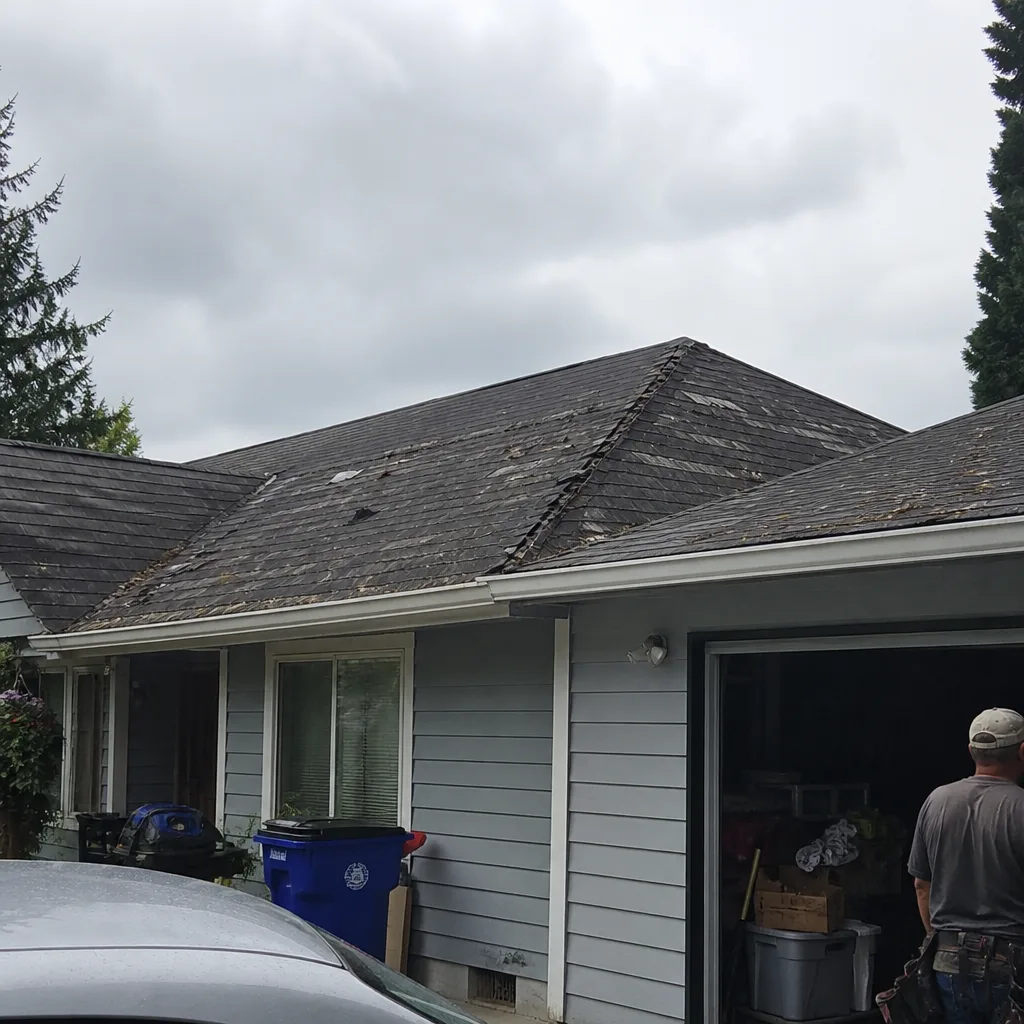 Before
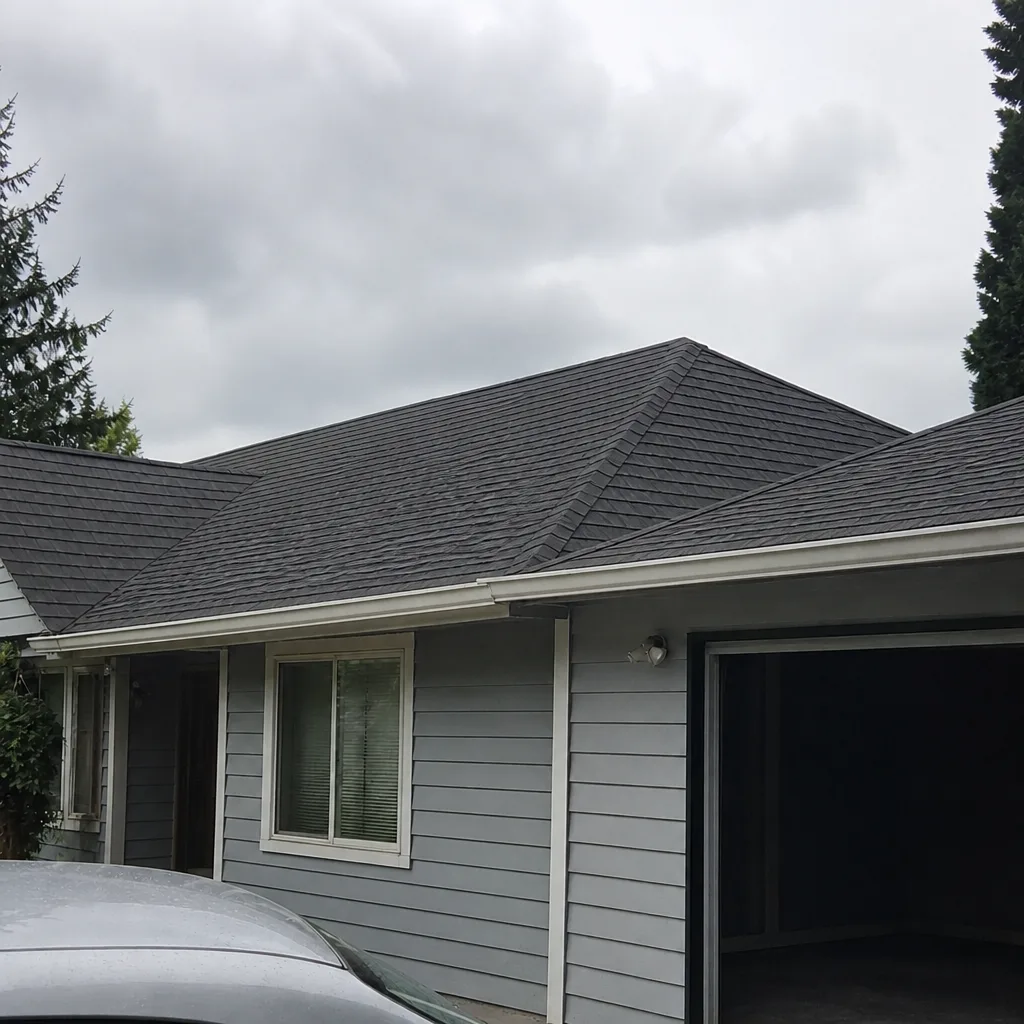 After
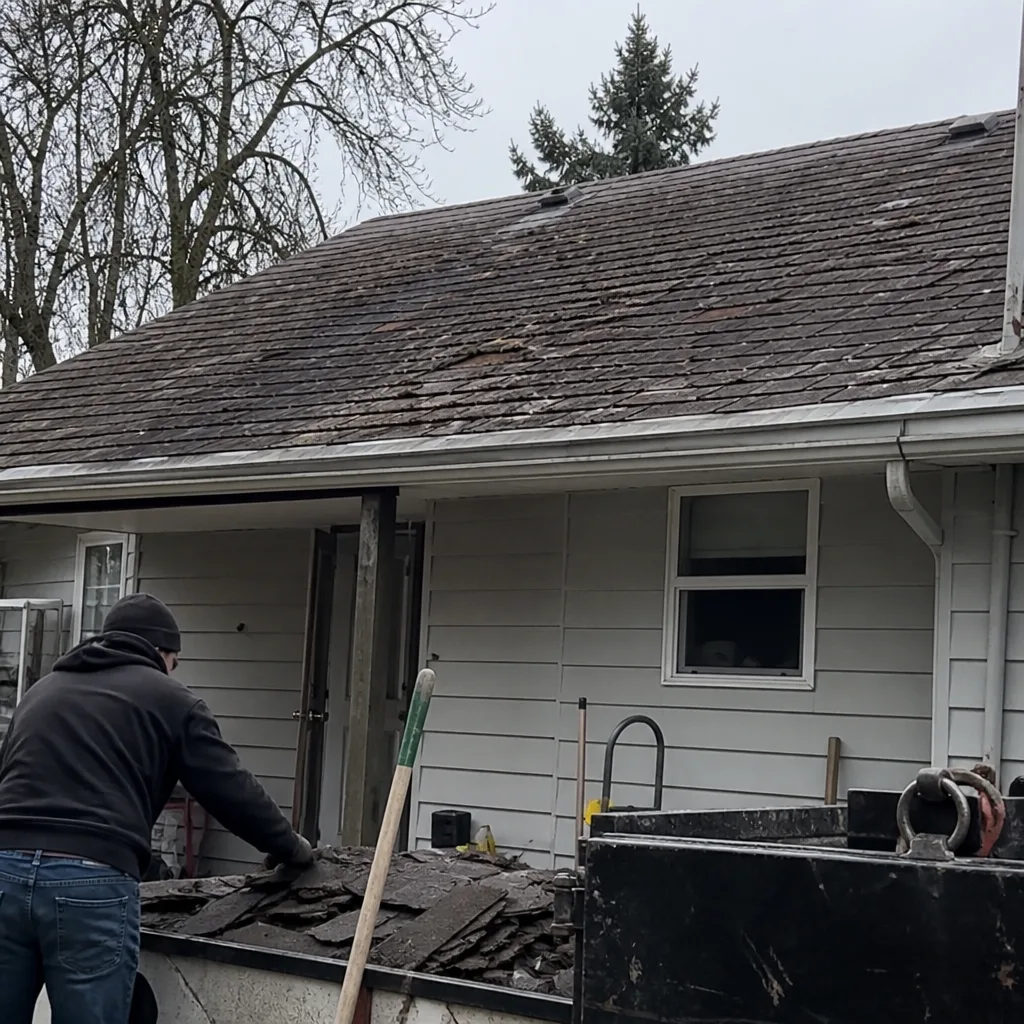 Before
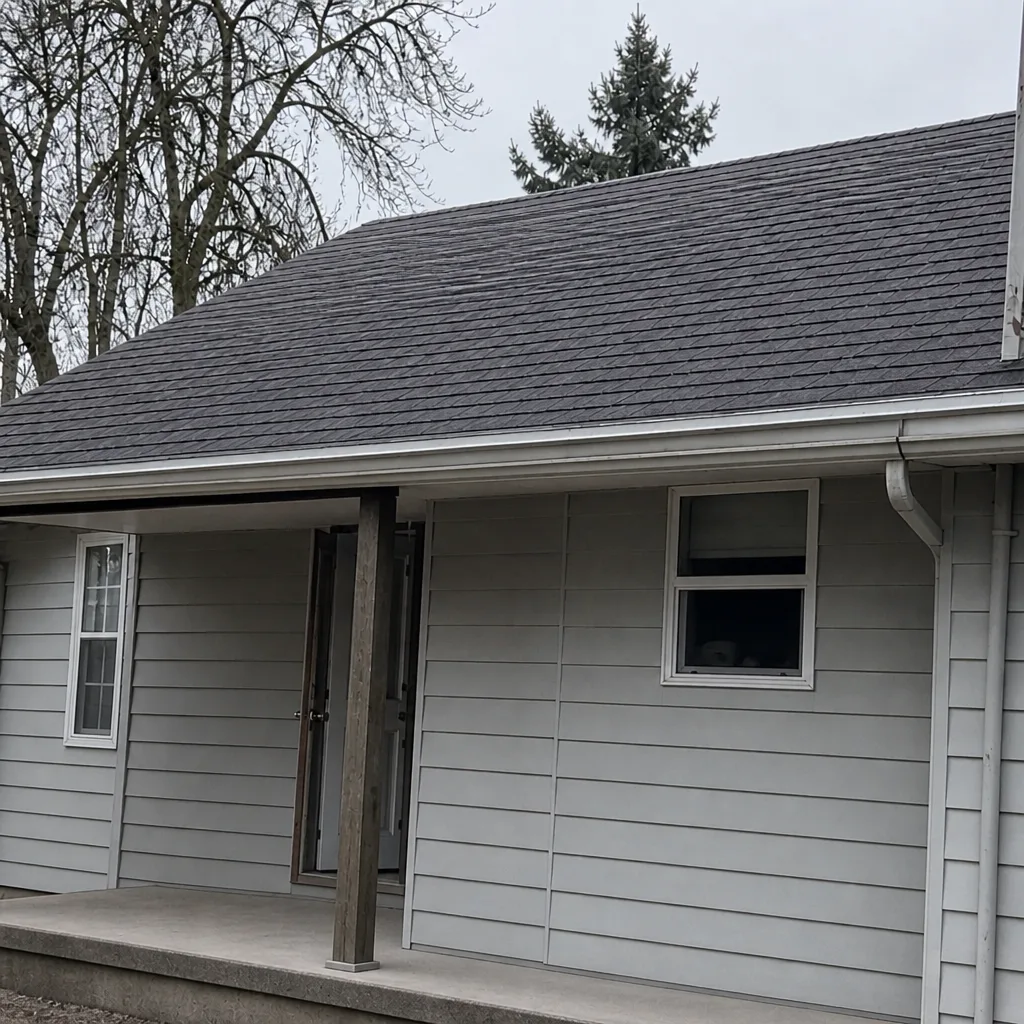 After
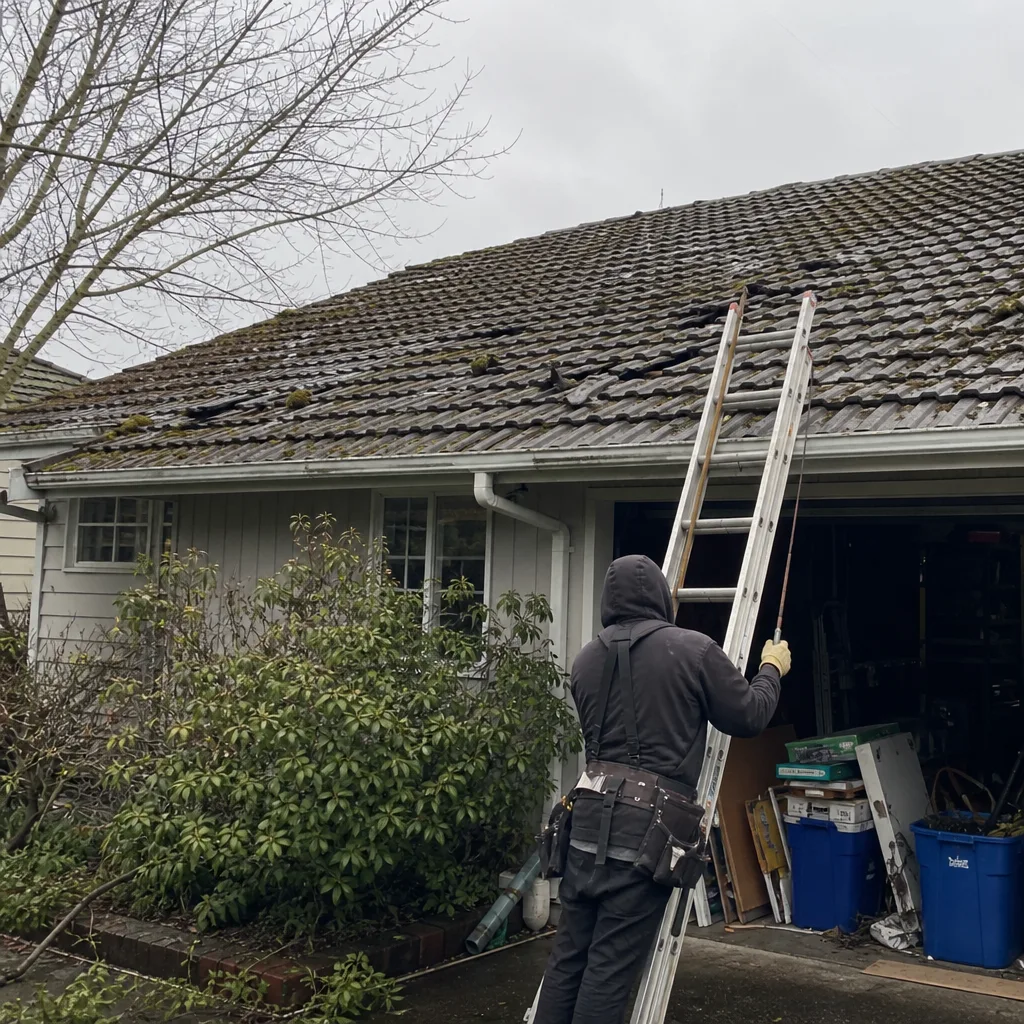 Before
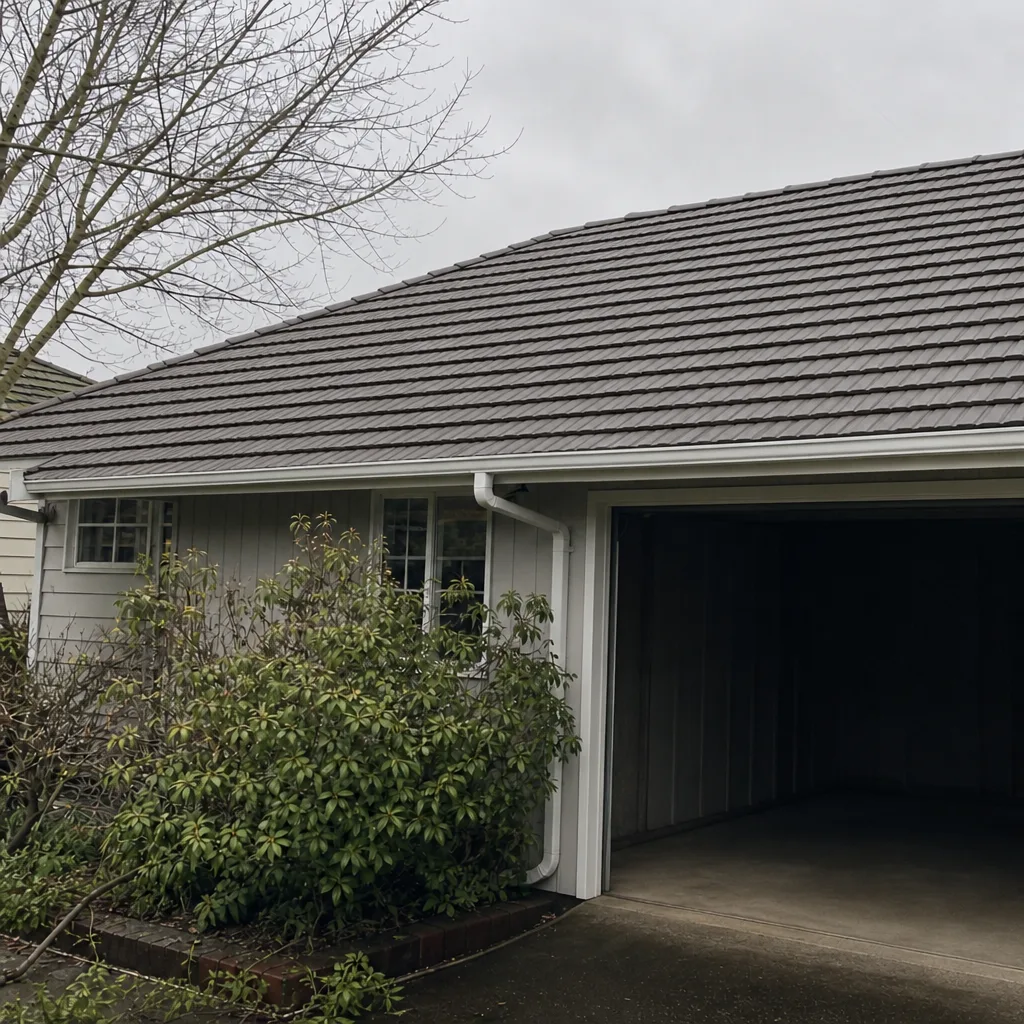 After
Red Flags Specific to the Tacoma Market
Some red flags are universal. Others are specific to the South Sound, where storms create opportunity and door-to-door pitches follow. Here’s what to watch for.
- Temporary registration with a permanent-sounding pitch. After wind events, phone numbers and business names you’ve never seen show up door to door. Check L&I before you sign, every time.
- Pressure to sign today. Legitimate contractors give you time to compare estimates and think it through. A price that expires in hours is a sales tactic.
- A crew you can’t identify. Ask who will be on the roof. If nobody can tell you, the liability question is unanswered.
- One-brand-only recommendations. If every roof gets the same product, the “recommendation” was pre-decided.
- Verbal scope changes. Any change – decking replacement, added flashing, an upgraded shingle – needs to be in writing before work continues.
- No permit conversation. A contractor who brushes off permits is a contractor whose work may not pass inspection.
- Cash-only and no contract. You’ll have no recourse if something goes wrong, and the state complaint process has nothing to work with.
Questions to Ask Before You Sign
Bring this list to every bid meeting. The answers tell you more than any brochure.
- Are you currently registered with Washington L&I, and what’s your registration number? (Verify it yourself.)
- How many roofing brands and material types do you install?
- Will your own employees install my roof, or subcontractors?
- Can you give me line-itemed estimates for at least two comparable products?
- Who pulls the permit, and what’s the inspection process?
- What does your workmanship warranty cover, and for how long?
- What’s the payment schedule, and how is it tied to milestones?
- How will you handle decking that’s damaged once the old roof is off?
- What’s the clean-up plan, and who handles debris removal?
- Can you put all of the above in the written contract?
If any answer feels evasive, ask again. Good contractors aren’t threatened by good questions. Our team welcomes them, which is part of why we walk Tacoma homeowners through brand and material comparisons rather than pushing a single line.
Common Mistakes to Avoid
- Comparing only the bottom-line number. Two bids that look the same rarely are. Line-itemize before you compare, or you’re comparing the wrong things.
- Skipping the L&I check. It takes five minutes and it’s the single most reliable way to filter out unregistered contractors in Tacoma.
- Never asking about subcontractors. If the crew on your roof isn’t the company you hired, your liability picture changes and your warranty may be diluted.
- Accepting a single-brand recommendation. A contractor with one product line can’t tell you honestly whether it’s the best roof for your home.
- Paying too much up front. Large deposits before materials arrive are the most common way homeowners lose money.
- Letting scope changes go verbal. Decking damage, added flashing, upgraded shingles – all of it needs to be in writing before work continues.
- Skipping permits. Most cities require a permit for reroofing. Confirm who pulls it, and make sure the job is inspected.
When to Call a Professional
Some roofing questions need a trained eye. Call a professional if you see curling, missing, or granule-heavy shingles after a wind event; if you find water stains on a ceiling or attic sheathing; if your roof is past its expected service life and you’re planning the next decade of maintenance; if you’re seeing flashing failures around chimneys, skylights, or valleys; or if you’re planning a replacement, a new build, or a material switch from shingle to metal or tile. Those decisions involve structural, ventilation, and warranty questions that benefit from a material-agnostic recommendation. Tacoma Roofing Co offers free estimates in Tacoma – call (253) 295-5163 to book one. We answer 24/7. A call outside dispatch hours is booked into the next opening, Sunday through Friday, 7am to 7pm.
Frequently Asked Questions
Search the contractor’s business name in Washington State’s L&I licensing database and confirm the registration is active, plus check that bond and insurance are on file and the business name matches your estimate. The database confirms compliance, not quality, so verify registration first and then ask the questions in this guide. Call (253) 295-5163 for a free estimate.
Most cities require a permit for reroofing, and Tacoma is no different, so ask your city’s building department to confirm the rule for your address. A legitimate contractor will pull the permit and walk you through the inspection. If a contractor suggests skipping the permit, that’s a red flag. Call (253) 295-5163 for a free estimate.
Some will, because that’s the only product they stock or install. A contractor who handles only one brand can’t give you an honest comparison, so ask up front how many brands and material types they install. We install seven brands – GAF, CertainTeed, Owens Corning, IKO, Atlas, Tamko, and Boral – across shingle, tile, and metal. Call (253) 295-5163 for a free estimate.
Most residential replacements take a few days depending on the size and pitch of the roof, the number of layers removed, and the weather window. Your written estimate should name a start window and anticipated duration. Any decking damage discovered during tear-off can extend the timeline, which is why it should be priced in advance. Call (253) 295-5163 for a free estimate.
A modest deposit to secure materials and schedule, with remaining payments tied to milestones like tear-off, dry-in, installation, and final inspection. Large upfront deposits are the biggest financial risk in roofing, so ask for the payment schedule in the contract before you sign. Call (253) 295-5163 for a free estimate.
Manufacturer warranties vary, and some depend on the contractor being an authorized installer of that product. If the crew is a subcontractor, ask exactly how the warranty is registered and what recourse you have later. Written terms should be part of the contract. Call (253) 295-5163 for a free estimate.
The Bottom Line
Hiring a roofing contractor in Tacoma isn’t a bid-comparison exercise. It’s a vetting exercise. Confirm the L&I registration, ask who’s on the roof, insist on line-itemed estimates with manufacturer names, tie payments to milestones, and treat a one-brand recommendation as a question rather than an answer. The contractors worth hiring will welcome every one of those questions. The ones who won’t are telling you something about how the job will go. Bring the checklist, ask the questions, and get the answers in writing before anyone climbs on your roof. Call (253) 295-5163. We answer 24/7. Fast dispatch from 7am to 7pm, Sunday through Friday.
Written by the team at Tacoma Roofing Co.